
Table of Contents
- Why Wildlife Art Works in Modern Spaces
- Choosing the Right Wildlife Art for Your Home
- Is Wildlife-Themed Kitchen Decor Still in Style?
- Modern Animal Wall Art Ideas for Different Rooms
- Best Lighting for Home Art Displays
- Placement and Arrangement Techniques
- Styling Wildlife Art with Contemporary Furnishings
- Conclusion
Last Updated: August 30, 2026
Why Wildlife Art Works in Modern Spaces
Wildlife art brings movement, colour, and narrative to contemporary interiors. A striking pheasant or swallow study creates a focal point without demanding attention in the way abstract art sometimes does. Quality wildlife paintings carry authenticity rooted in observation and artistic skill rather than trend-chasing, which reads as intentional to discerning homeowners curating their living spaces.
A hand-painted original or professionally framed print signed by the artist carries weight that mass-produced alternatives cannot match. Jack Fethers, a professional artist since 2012 specialising in British wildlife, understands this distinction. Contemporary design amplifies what wildlife art offers: minimalist furnishings, neutral palettes, and clean lines create visual rest that allows a well-positioned animal painting to breathe and become the room's emotional anchor.
Choosing the Right Wildlife Art for Your Home
Selecting wildlife art requires thought about scale, medium, colour palette, and how the piece will interact with existing furnishings.
Framed prints versus canvas originals
Framed prints, particularly signed, limited-edition prints from established artists, offer excellent value and flexibility. A framed French Partridge or Framed Study of Swallows from Jack Fethers costs between £54.99 and £64.99 and arrives ready to hang, professionally presented, numbered works signed by the artist that carry authenticity without the investment of an original canvas.

Canvas originals are larger, more commanding, and one-of-a-kind. For most homeowners, a quality framed print offers the sweet spot: professional presentation, artist authentication, and the satisfaction of owning a numbered, signed work without substantial cost.
Scale and subject matter
Scale matters more than most realise. Artwork should occupy roughly one-third of the wall space above a sofa, shelf, or console for visual balance. Subject matter should reflect both your genuine interests and your home's aesthetic direction. A homeowner passionate about British game birds might choose a Framed Golden Pheasant, which works beautifully in both traditional and contemporary settings. Someone drawn to delicate subjects might prefer the Framed Study of Swallows, which suits minimalist spaces.
Consider the colour palette: warm-toned pieces with golds and browns integrate easily into neutral or earthy interiors, whilst cooler blues and greys work better in contemporary spaces. Frame colour matters as much as the artwork itself, a gold frame elevates traditional pieces, whilst simple black or natural wood keeps things contemporary.
Is Wildlife-Themed Kitchen Decor Still in Style?
Wildlife-themed kitchen decor endures when executed with restraint. Modern kitchens favour selective, intentional use of wildlife elements, a single striking piece rather than a coordinated collection. A framed pheasant or bird study above a kitchen island reads as sophisticated; a full suite of matching accessories risks feeling dated.
Modern kitchens' minimalism and clean lines create an ideal backdrop for a single, well-chosen wildlife artwork. The key is avoiding cutesy or whimsical interpretations. A hand-painted study of game birds or native species feels contemporary; cartoon-style illustrations feel dated. Jack Fethers' work exemplifies this approach, the artwork is beautiful enough to stand on its own merit, not reliant on novelty or thematic coordination.

Modern Animal Wall Art Ideas for Different Rooms
Wildlife art placement depends on the room's function and lifestyle.

Living spaces and feature walls
The living room is where wildlife art makes its strongest statement. A feature wall is ideal for a larger piece or carefully curated grouping. A single large framed print, such as the Framed Pheasant in Flight, works beautifully as a focal point with dynamic composition and rich colouring.

For a curated approach, consider a gallery wall arrangement with pieces of varying sizes but similar themes. Maintain visual cohesion through consistent framing and roughly 5-7 centimetres between frames (the American Academy of Dermatology). A tall, vertical piece in a corner beside a reading chair creates an intimate focal point without dominating the space.
Bedrooms and personal retreats
Bedrooms call for artwork that soothes rather than stimulates. Smaller, more intimate pieces excel here. A Framed Study of Swallows or delicate bird study works beautifully above a bedside table or opposite the bed. Cooler tones, blues, soft greys, muted greens, feel more restful than warm, saturated colours.
Personal retreats, home offices, reading nooks, and dressing rooms are ideal for pieces reflecting your specific interests. A framed original or signed limited-edition print becomes a daily source of pleasure and inspiration.
Kitchens and dining areas
Kitchens and dining areas benefit from artwork that's beautiful but not distracting. A single, well-positioned piece works better than multiple artworks competing for focus. Dining room walls, particularly above a sideboard or console, are ideal locations. In kitchens, position artwork above a counter or island, away from cooking areas and moisture, at eye level when standing.
Best Lighting for Home Art Displays
Lighting transforms artwork. Natural light is ideal when available, but it's inconsistent and can fade artwork over time. The solution is layered artificial lighting that mimics natural light without ultraviolet damage.
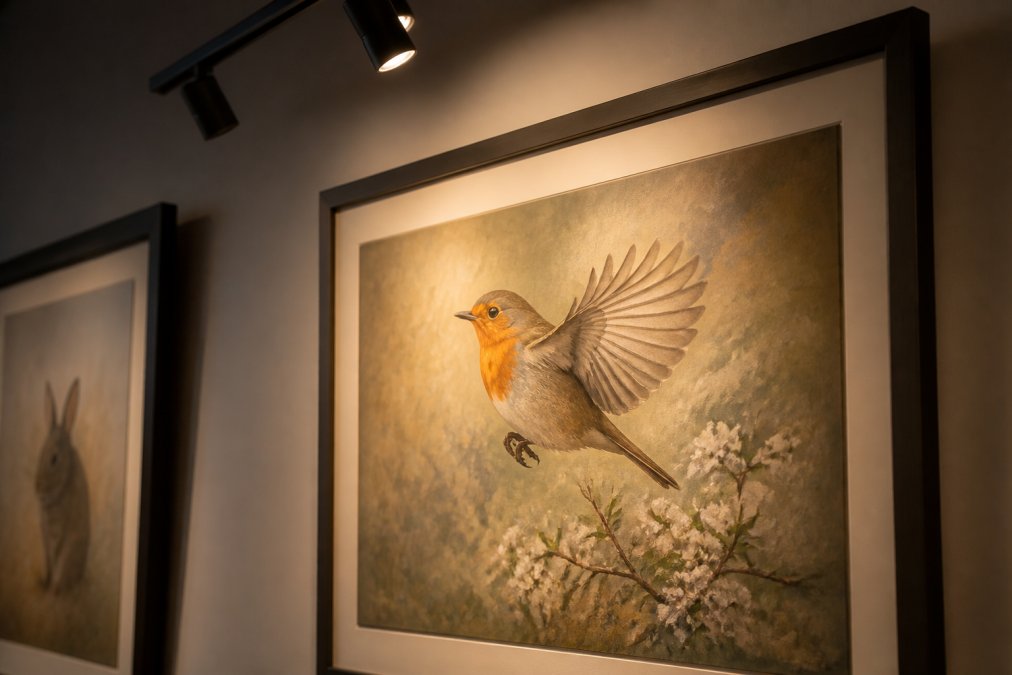
Track lighting or picture lights are the professional approach. A warm-toned LED picture light positioned above the frame creates a gallery-like effect without glare. Light should be angled slightly downward and away from the viewer to avoid reflection. Most artwork benefits from light around 2700-3000 Kelvin, which adds richness and prevents clinical appearance (the CDC).
Avoid placing artwork directly opposite windows or where natural light creates glare. Keep artwork away from direct sunlight, which fades colours and damages paper and canvas. Dimmer switches allow adjustment depending on time of day and mood, adding sophistication to the display.
Placement and Arrangement Techniques
How you position artwork is as important as the artwork itself.
Single statement pieces
Position single large artwork at eye level, roughly 152-157 centimetres from the floor to the frame centre (the American Academy of Dermatology). Leave generous margins, at least 30 centimetres of wall space on all sides. The artwork should be proportional to furniture beneath it; a large painting above a narrow console looks unbalanced, whilst a small print above a substantial sofa gets lost.
Gallery walls and groupings
Gallery walls are more forgiving because the grouping becomes the focal point. Lay out your arrangement on the floor before hanging. Arrange frames in a grid pattern for a modern look or salon-style for something more eclectic, aiming for roughly 5-7 centimetres between frames.
Keep the overall grouping roughly square or rectangular rather than spreading pieces haphazardly. Matching frame colour and style creates unity even if artworks differ. A gallery wall of wildlife prints in matching black frames feels cohesive and contemporary.
Avoiding visual clutter
Restraint is key. A carefully chosen single piece makes a stronger statement than five mediocre ones. Artwork should not compete with furnishings for visual attention. A wall already busy with shelving, mirrors, and decorative objects doesn't need additional artwork. Consider the overall colour palette, artwork should enhance rather than clash with existing furnishings.
Styling Wildlife Art with Contemporary Furnishings
Wildlife art sits comfortably in contemporary interiors when surrounding furnishings are thoughtfully chosen. Contemporary styling favours clean lines, minimal ornamentation, and quality materials. Pair wildlife artwork with furniture sharing these values.
Colour coordination is subtle but important. If your artwork features warm tones, choose furnishings in complementary neutral shades: warm greys, soft taupes, natural wood tones. Cool-toned artwork works better with cooler neutrals: soft blues, cool greys, white, pale oak.
Texture adds richness without visual clutter. Pair artwork with furnishings having interesting textures, natural linen, wool, leather, or wood, rather than smooth, uniform surfaces. Accessories should be minimal and purposeful. The goal is a curated, intentional look rather than a decorated one.
Jack Fethers' work integrates seamlessly into contemporary spaces because the pieces are beautiful enough to stand on their own. A hand-painted original or professionally framed signed print doesn't require extensive styling or coordination.
Displaying wildlife art thoughtfully transforms a room from merely decorated to genuinely curated. Quality matters more than quantity, a single striking piece from a professional artist carries more weight than multiple mediocre prints. At Jack Fethers, our hand-painted originals and framed signed prints are designed to anchor contemporary spaces with elegance and authenticity. Whether selecting a Framed Golden Pheasant, a Study of Swallows, or commissioning a bespoke piece, the goal is artwork that feels like a natural extension of your home. Explore our collection and discover how British wildlife art can elevate your living spaces. View all wildlife art and home decor
| Placement Type | Best For | Key Consideration |
|---|---|---|
| Single statement piece | Living rooms, feature walls | Position at eye level (152-157cm to frame centre) |
| Gallery wall | Eclectic collections, multiple pieces | Maintain 5-7cm spacing, consistent framing |
| Bedroom display | Personal retreats, calming spaces | Choose smaller, intimate pieces with cooler tones |
| Kitchen placement | Dining areas, above islands | Avoid moisture-prone zones, position away from cooking |
| Corner placement | Reading nooks, intimate spaces | Works well for vertical pieces beside seating |
Frequently Asked Questions
Will wildlife art look too traditional or cottage-style in a modern flat?
Not at all. Contemporary wildlife art, especially pieces with minimalist framing and clean compositions, integrates seamlessly into modern interiors. The key is choosing artwork with bold colours or simplified forms rather than overly detailed botanical styles. Framed prints like the Framed Golden Pheasant (£64.99) work beautifully in minimalist spaces when paired with neutral walls and contemporary furniture. The art becomes a focal point rather than period decoration.
Is wildlife-themed kitchen decor still fashionable in 2026?
Yes, wildlife themes remain relevant in kitchens when executed thoughtfully. The trend has shifted away from busy cottage aesthetics toward curated, artistic displays. A single well-chosen piece, such as a framed study of swallows (£64.99), above a breakfast bar or open shelving adds personality without overwhelming the space. Pair it with clean lines, natural materials, and restrained colour palettes to keep the look current and sophisticated rather than dated.
How do I know if hand-painted wildlife art is worth the investment compared to cheaper prints?
Hand-painted pieces offer longevity, uniqueness, and artistic integrity that mass-produced prints cannot match. Original artwork and artist-signed framed prints retain their visual impact over decades. They're crafted with attention to detail, colour accuracy, and material quality. When purchasing from established artists like Jack Fethers (professional artist since 2012), you're investing in a tangible connection to the creator's skill and vision, something that justifies the price difference over generic reproductions.
What's the best way to hang wildlife art in a small room without it feeling cramped?
In small spaces, choose a single statement piece rather than multiple artworks. Position it at eye level on a feature wall, leaving breathing room around the frame. Opt for framed prints in standard sizes (A4 or A3) rather than oversized canvases. Use light-coloured frames and ensure adequate wall space around the artwork. This approach draws the eye without making the room feel cluttered. If you want multiple pieces, arrange them in a tight, organised grid rather than scattered placement.
This article was written using GrandRanker