
Table of Contents
- Why Hand Painted Designs on Everyday Objects Matter
- The Best Everyday Objects for Hand Painted Designs
- Paints, Sealing and Durability: What Actually Lasts
- How to Clean Hand Painted Glassware Safely
- Commissioning Custom Painted Home Decor
- British Wildlife Themes and Contemporary Interiors
- Choosing Hand Painted Pieces Worth the Investment
- Conclusion
Last Updated: 24 August 2026
Why Hand Painted Designs on Everyday Objects Matter
Hand painted designs on everyday objects are both functional and extraordinary. At Jack Fethers, we believe that the objects you reach for each morning, a whisky tumbler, a water jug, a wine glass, deserve more than mass-produced uniformity. They deserve a story.

Consumer interest in handmade, artisan-made goods has grown steadily as people push back against high-street sameness. According to The Crafts Council's research on craft in the UK, buyers place increasing value on provenance and maker identity.
What separates a hand painted piece from a printed alternative is the irreducible presence of the artist's hand. No two brushstrokes are identical. A pheasant on one tumbler will hold its wing at a slightly different angle to the next. That variability is not a flaw; it is the whole point. A beautifully painted object, properly sealed and cared for, becomes part of a home's fabric in a way a printed mug simply does not.
The Best Everyday Objects for Hand Painted Designs
The most successful hand painted designs appear on objects that are handled regularly, displayed openly, and made from materials that hold paint well. Glass and ceramic lead the field for good reason.
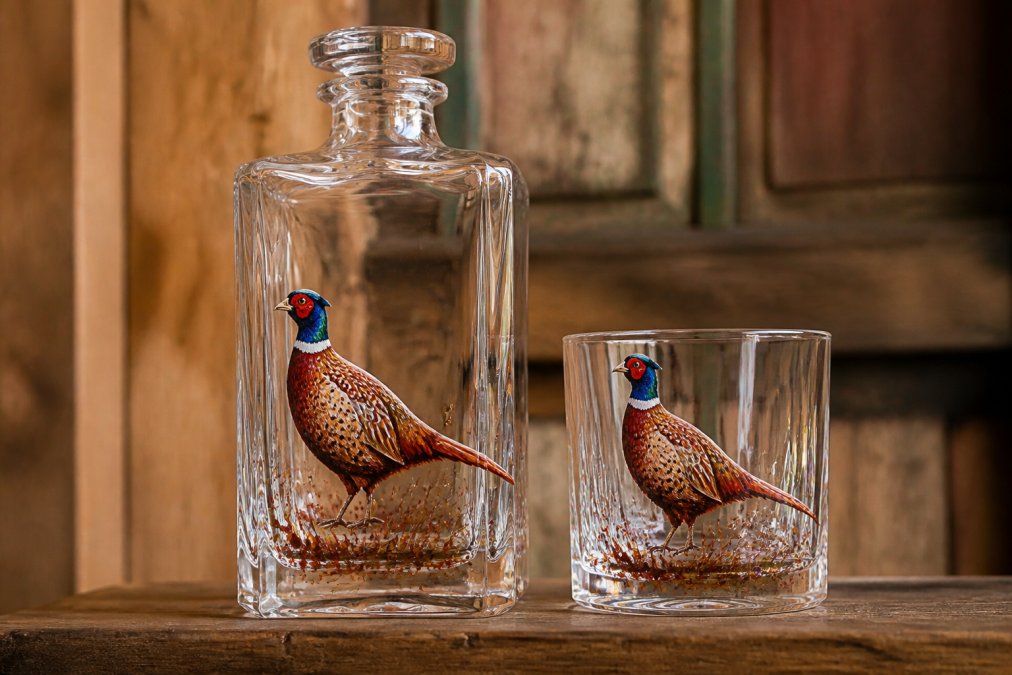
The best objects share a few qualities: a smooth, non-porous surface; a shape that gives the artist room to compose; and a function that keeps the piece in daily use.
| Object | Best Design Style | Typical Use | Durability After Firing |
|---|---|---|---|
| Whisky tumbler | Wildlife, botanical | Daily use | High (kiln-fired) |
| Wine glass | Delicate linework, birds | Dinner table | High (kiln-fired) |
| Decanter | Statement motifs | Display and use | High (kiln-fired) |
| Water jug | Repeat patterns, florals | Kitchen, dining | High (kiln-fired) |
| Ceramic jug | Landscape, wildlife | Kitchen display | High (kiln-fired) |
Glassware: Tumblers, Wine Glasses and Decanters
Glassware is the natural home for hand painted wildlife art. The transparency of glass creates a luminous quality that other surfaces cannot replicate: light passes through a painted swallow on a wine glass in a way that makes the design feel alive.
Jack Fethers' hand painted pheasant glassware (from £39.00) illustrates why glassware works so well as a canvas. Each piece is painted individually by Jack Fetherstonhaugh, signed and dated on the back, and fired in a kiln to make the paint permanent. The Hand Painted Red Grouse Glassware set (£154.00) pairs whisky glasses with a matching decanter, a considered gift for anyone who appreciates both craft and a decent dram.
Decanters are particularly effective because their surface area allows for ambitious compositions. A pheasant rendered across the curved body can show movement and habitat in a way a tumbler cannot. Wine glasses present a different challenge: the stem and bowl create natural compositional constraints that reward precision, with swallow designs working especially well.
Ceramics, Jugs and Other Household Items
Ceramic surfaces absorb paint differently to glass and offer a warmer, more textural quality. Water jugs, mugs, and decorative vases respond well to hand painted wildlife motifs, particularly when intended for display rather than daily washing.
The Swallow Glassware collection from Jack Fethers includes a water jug alongside wine glasses and whisky tumblers, since a painted jug occupies a permanent place on the kitchen table rather than returning to a cupboard after each use. Visibility matters: an object you see every day has far more impact than one reserved for special occasions.
Paints, Sealing and Durability: What Actually Lasts
The honest answer about durability is that it depends almost entirely on process. A beautifully painted piece that has not been properly sealed or fired will fade and chip. A piece that has been kiln-fired correctly will outlast almost anything else in your home.
Hand painted designs on glass and ceramic fall into two categories: those fired in a kiln to permanently bond the paint to the surface, and those sealed with a cold-cure varnish. The difference in longevity is significant.
Kiln-fired pieces, like all glassware in the Jack Fethers collection, undergo a firing process that fuses the paint with the glass at high temperature. The result is a surface that is genuinely dishwasher-safe and resistant to everyday wear. Cold-cure sealants offer a lower-cost alternative but are more vulnerable to abrasion and water exposure.
For buyers, the practical implication is straightforward: kiln-fired pieces justify a higher price point because they will remain beautiful for years of regular use.
How to Clean Hand Painted Glassware Safely
Cleaning hand painted glassware safely comes down to one principle: gentle handling protects the painted surface and extends the life of the design.
For kiln-fired, dishwasher-safe pieces:
- Use the top rack of the dishwasher only
- Choose a gentle or glassware cycle where available
- Avoid harsh detergents with high alkaline content
- Do not stack painted pieces where they will knock against each other
For cold-sealed or unverified pieces:
- Hand wash only, using cool or lukewarm water
- Use a soft cloth or sponge; avoid abrasive pads entirely
- Do not soak for extended periods
- Pat dry rather than air-drying in standing water
According to [guidance from the(/blogs/news/buying-custom-british-wildlife-art-online) Victoria and Albert Museum on caring for decorated ceramics and glass | vam.ac.uk], avoiding sudden temperature changes is one of the most important factors in preserving decorated surfaces. Running very hot water directly onto a cold painted glass creates stress fractures that can lift paint over time.
Commissioning Custom Painted Home Décor
Commissioning custom painted home decor is one of the most direct ways to acquire a genuinely unique piece. Rather than selecting from an existing range, you work with an artist to create something built around a specific subject, occasion, or space.
What to Expect During the Commission Process
The commission process typically begins with a conversation. For a pet portrait on glassware, the buyer provides a clear photograph and discusses the glass type, size, and any specific preferences for composition or colour. The artist then works from that brief to produce a design.
Jack Fethers offers custom pet portrait commissions on glassware (from £85.00), where buyers upload a photo of their pet and choose the glass format. Each piece is entirely hand painted, making it a genuinely one-of-a-kind artwork.

A good commission process involves iteration. An artist worth working with will share progress updates and welcome feedback before completion. Communicate your vision clearly at the outset rather than hoping the artist will intuit it.
Timelines, Occasions and Getting It Right
Timelines for hand painted commissions vary depending on complexity and the artist's workload. For a wedding gift or retirement present, three months' lead time is comfortable; six weeks is workable for simpler pieces.
Jack Fethers typically delivers commission pieces within two weeks. For a wedding gift three months out, that timeline is more than achievable. The occasions that suit a commissioned hand painted piece best are those where the gift needs to feel considered: retirements, significant birthdays, weddings, and housewarmings.
British Wildlife Themes and Contemporary Interiors
The assumption that British wildlife art belongs in a country cottage is worth challenging. Pheasants, swallows, red grouse, and other native species have a graphic quality that translates remarkably well into contemporary interiors when the execution is confident rather than sentimental.
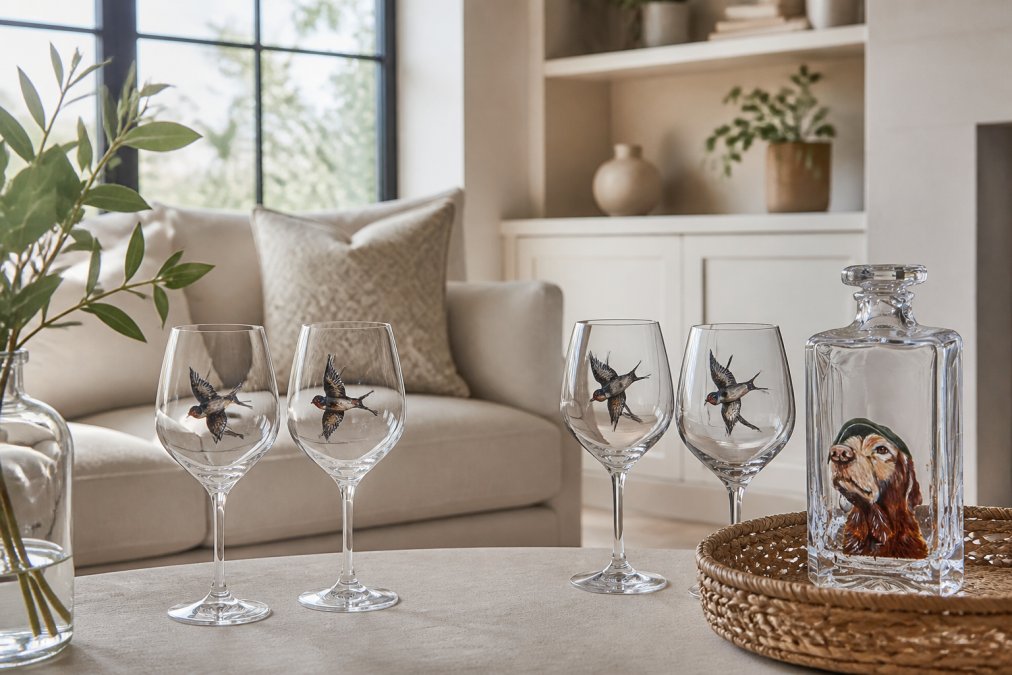
The key is the artist's approach. A swallow rendered with clean linework and restrained colour sits comfortably on a minimalist shelf alongside concrete, linen, and natural wood. Jack Fethers' swallow glassware demonstrates this well: the birds are painted with economy and precision, their forms working with the glass rather than competing with it.

According to research from the Design Council on consumer attitudes to craft and design in the home, buyers increasingly seek objects that reflect individual taste rather than trend-led purchasing. British wildlife themes, handled with a contemporary sensibility, sit squarely within that appetite.
The practical question for buyers is whether the piece will work with what they already own. The answer is almost always yes, provided the palette is considered. Pieces that use a limited, cohesive colour range integrate naturally into most interior schemes.
Choosing Hand Painted Pieces Worth the Investment
Hand painted designs on everyday objects cost more than printed alternatives because they take longer to make, require genuine skill, and produce something that cannot be replicated exactly. A hand painted glass is the original; a signed artist print is a reproduction.
What makes a hand painted piece worth the investment:
- The artist's track record. Jack Fetherstonhaugh has been a professional artist since 2012. That continuity shows in the confidence of the linework and consistency of compositions.
- The firing process. Kiln-fired paint is permanent. A piece that will look identical in ten years is a better investment than one that will fade in two.
- The signing and dating. Every Jack Fethers piece is signed and dated on the back, establishing provenance and adding to the object's value over time.
- The uniqueness. No two pieces from the same design are identical. Each pheasant is painted slightly differently.
The safest protection against disappointment is transparency: an artist who shows their process, signs their work, and fires it in a kiln is making a public commitment to quality that a mass-market manufacturer never has to make.
As noted by the Crafts Council's guidance on buying original craft, buying directly from the maker and being able to ask questions about materials and process is one of the clearest indicators of genuine craft quality.
Finding hand painted designs that genuinely elevate a space, or make a gift feel truly considered, is harder than it looks. Jack Fethers offers a focused collection of hand painted glassware and custom commissions rooted in British wildlife art, with every piece kiln-fired for lasting quality and signed by the artist. View all Jack Fethers hand painted pieces and find the one that belongs in your home.
Frequently Asked Questions
Are hand painted everyday objects dishwasher safe?
It depends entirely on how the paint has been finished. Pieces fired in a kiln after painting, such as the glassware from Jack Fethers, are made permanently dishwasher safe through that process. Air-dried or oven-baked paints on glassware or ceramics are generally more fragile and benefit from hand washing. Always check the product description before putting any hand painted item in the dishwasher, as heat and detergent can degrade unfired paint over time.
How can I commission bespoke hand painted glassware?
Start by contacting the artist directly to discuss your idea, preferred subject, glass type, and any occasion or deadline. For commissions like the Pet PAWtraits on glassware from Jack Fethers, you simply upload a photo and choose your glass style. Most artists appreciate as much detail as possible upfront. Expect a turnaround of one to three weeks depending on complexity and current workload. Discussing your requirements before placing an order helps ensure the finished piece matches your expectations.
How do hand painted designs on glass or ceramic items stay durable over time?
Durability comes from two factors: the type of paint used and how it is cured. Specialist glass paints fired in a kiln bond permanently to the surface, making them resistant to washing, handling and everyday use. Without kiln firing, even good-quality glass paint can chip or fade with regular contact. For ceramics, high-fire glazes offer the most lasting finish. Buying from a professional artist who specifies their curing method gives you the best assurance of longevity.
What are the best everyday objects to use as a canvas for painting?
Glassware is one of the most rewarding surfaces: tumblers, wine glasses, decanters and water jugs all take paint well and display designs beautifully when held up to light. Ceramics, including mugs, plates and jugs, are also popular because they hold fine detail. Beyond the kitchen, wooden trays, canvas tote bags and terracotta plant pots offer accessible starting points. The key is choosing a surface that suits the paint type and the level of detail you want to achieve.
This article was written using GrandRanker